Why Women Need Permission to Pause Before Burnout
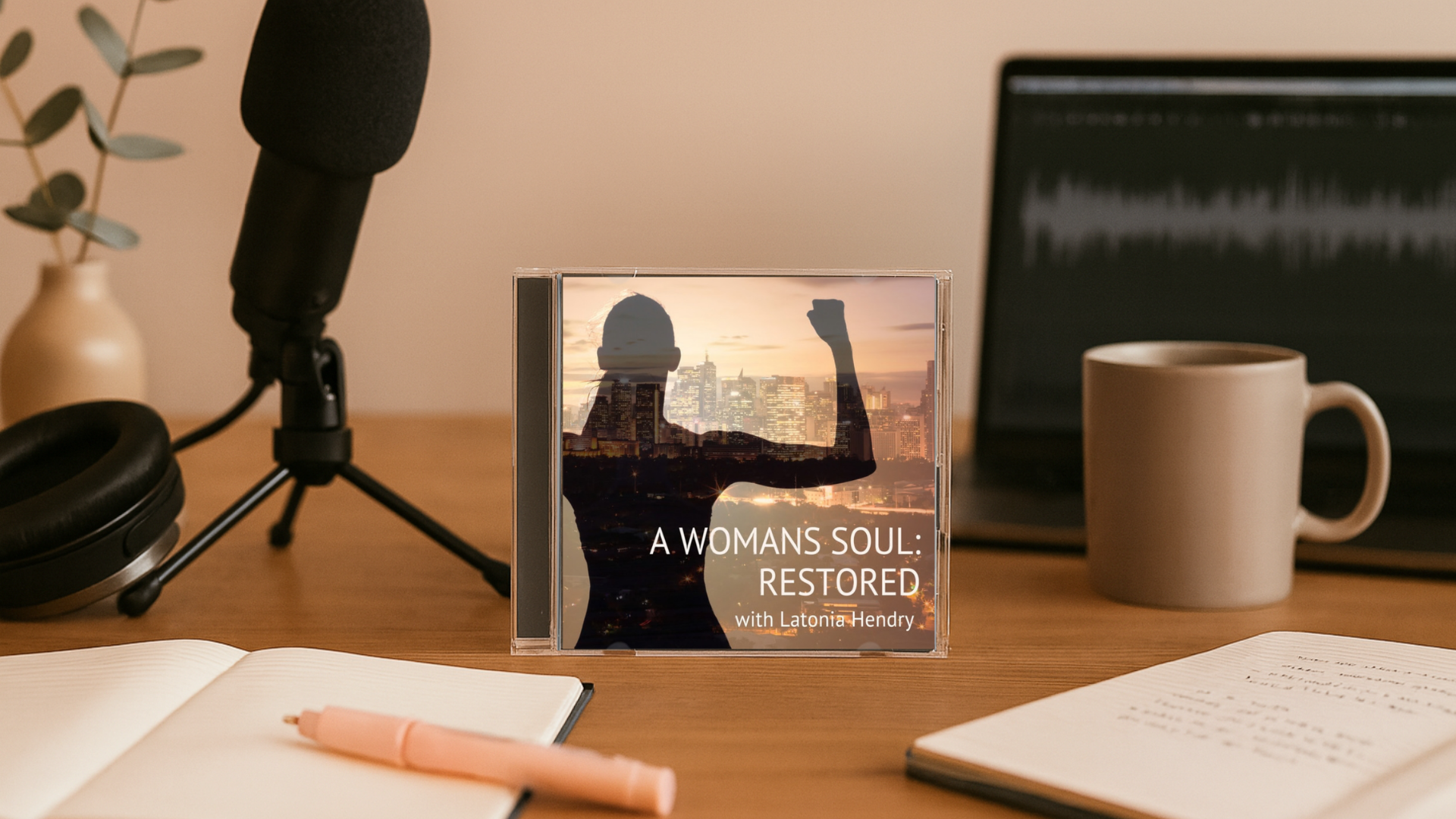
I recently had the pleasure of joining Latonia Hendry on A Woman’s Soul Restored podcast for a conversation about creativity, burnout, and why so many women need permission to pause before life forces them to.
What I appreciated about our conversation was how quickly we moved beyond the idea of creativity as something decorative or optional. We talked about it as something much more practical. A way to regulate stress. A way to reconnect with yourself. A way to notice what is draining you before you reach the point where your body makes the decision for you.
That matters, especially for women who are used to carrying a lot.
If you would like to watch or listen to the full conversation, you can add the episode here.
A Childhood Full of Imagination
Like many children, I was naturally creative.
I loved making things. I had a strong imagination. I built little worlds, created tiny houses, and spent a lot of time inventing stories and spaces in my head. At the same time, I was deeply curious about the natural world. I wanted to understand how things worked, especially in biology and genetics.
When it came time to choose a path after high school, I felt pulled in both directions. I loved art, but I also loved science. My parents encouraged me to pursue science as a career and keep art as something I could do on the side.
That choice led me into molecular biology and eventually all the way through the academic ladder. I completed a bachelor’s degree, a master’s degree, a PhD, and a postdoctoral fellowship. For a long time, I believed I had made the practical choice.
And in many ways, I had.
But as I moved further into academia and then into industry, I also moved further away from the creative part of myself.
When Burnout Quietly Moves In
Later, when my children were a little older and I had more breathing room, I returned to art. I started painting again, spending time in my studio, and reconnecting with the part of myself that had been parked to the side for years.
That creative time became a real outlet for me.
Then the pandemic happened.
Like many people, I was suddenly trying to do everything at once. My company had landed a major contract to develop emergency ventilators, which meant intense pressure and long hours. At the same time, my children were home, school routines had disappeared, and the line between work and family life was almost nonexistent.
I found myself in my studio again, but this time something had changed.
I couldn’t create.
What had once felt relaxing and restorative now felt inaccessible. I would look at my supplies and feel completely blocked. At the time, I did not fully understand what was happening. Looking back, I can see it clearly. It was burnout.
Burnout did not show up as one dramatic event. It showed up as chronic stress, mental overload, and a growing numbness that made everything feel like different shades of grey.
The Doodling That Changed Everything
One day, during an endless Zoom call, I started doodling simple lines and shapes on a piece of paper.
It was not serious. It was not intended to become anything. But as I kept going, I noticed my breathing slowing down. My shoulders softened. Something in my body began to settle.
Being a scientist, I was curious. I wanted to know why something so simple felt so calming.
That curiosity led me to research art therapy and mindfulness-based approaches to stress relief. I began to understand that simple creative acts can shift attention away from mental overload and back into the body. They can create a sense of grounding, flow, and safety.
At the same time, I was also becoming more interested in coaching.
What stood out to me was that traditional art therapy often focuses on processing what has already happened. Coaching, by contrast, is much more forward-focused. It asks what you want next. It helps you move toward change.
That distinction mattered to me.
I did not want to work only in a reflective way. I wanted to help women use creativity as a proactive wellness tool, something that could support clarity, emotional regulation, and better choices before life became unmanageable.
That is where creative wellness coaching began.
Why This Work Matters for Women in STEM
The women I work with are often in STEM fields or similarly high-pressure environments. They are intelligent, capable, and used to being the reliable one. They are also often working in places where creativity, softness, and even basic emotional honesty are not always welcomed.
In many of these spaces, women learn to keep going, stay composed, and prove themselves over and over again. They do not always feel safe showing that they are overwhelmed. They may not even realize how much they are carrying until their bodies begin to protest.
That is why creativity matters here.
Not as a performance.
Not as something to be good at.
But as a way to pause and listen.
Many of the exercises I use are simple enough to feel almost silly at first. That is part of why they work. They take the pressure off.
What These Exercises Actually Look Like
One example we discussed on the podcast is the Bridge exercise.
You draw where you are now on one side of the page and where you want to be on the other. Then you draw the bridge between them and whatever obstacles sit underneath it.
The bridge can reveal a surprising amount. Some women draw strong, steady structures. Many draw rickety bridges with missing planks, wild water below, or obstacles that feel impossible to cross. One woman realized she had drawn herself nowhere near the bridge at all.
The point is not to make an impressive drawing. The point is to notice what comes out when you stop trying to manage everything in your head.
Another simple exercise is the Batteries tool. You draw a series of batteries representing different parts of your life, such as work, family, relationships, and self-care. Then you shade in how full or depleted each battery feels.
That one can be very confronting in the best way. It makes energy visible. It gives you a chance to ask where your energy is going, what is filling you up, and what is draining you dry.
These are not complicated tools. But they can open up honest conversations quickly, especially for women who are used to living on autopilot.
Permission to Pause
One of the strongest threads in my conversation with Latonia was this idea of permission.
So many women know they are tired, but they still do not feel allowed to stop. They tell themselves they can rest later, once the kids are older, once the workload calms down, once the house is in order, once someone else no longer needs them.
But later has a way of never arriving.
What I see over and over again is that women often wait until burnout makes the choice for them. Their body forces a pause they were never willing to claim for themselves.
That is part of why this work matters so much.
It helps women practice pausing before the crash. It helps them ask what they need, what they value, and what kind of life they are actually building.
Not in a dramatic, overnight transformation kind of way. In a steady, honest, practical way.
Small Steps Still Count
If there is one thing I hope women take away from this work, it is that they do not need to change everything at once.
You do not need to redesign your whole life this week. You do not need a perfect self-care routine or a beautiful sketchbook or a big block of free time.
You need a place to begin.
That beginning might be five quiet minutes with a pen and paper. It might be using your children’s markers instead of buying anything new. It might be noticing that your battery is low and asking for help before you hit empty.
Small steps really do matter.
They are often the only way lasting change happens.
If This Conversation Resonates
If this conversation feels familiar, you are not alone.
If you have been putting yourself last, running on stress, or waiting for the “right time” to take care of yourself, now may be a good time to try something small.
You can start with the 5-Day Creative Reset Challenge, which offers simple, art therapy-inspired exercises delivered by email.
You can also explore The Creative Shift, my weekly newsletter where I share reflections, prompts, and practical tools for women who want more balance, more breathing room, and more connection to themselves.
Because creativity is not just something you do when life is easy.
Sometimes it is the very thing that helps you find your way back to yourself.