Why Saying Yes Too Often Leads to Burnout
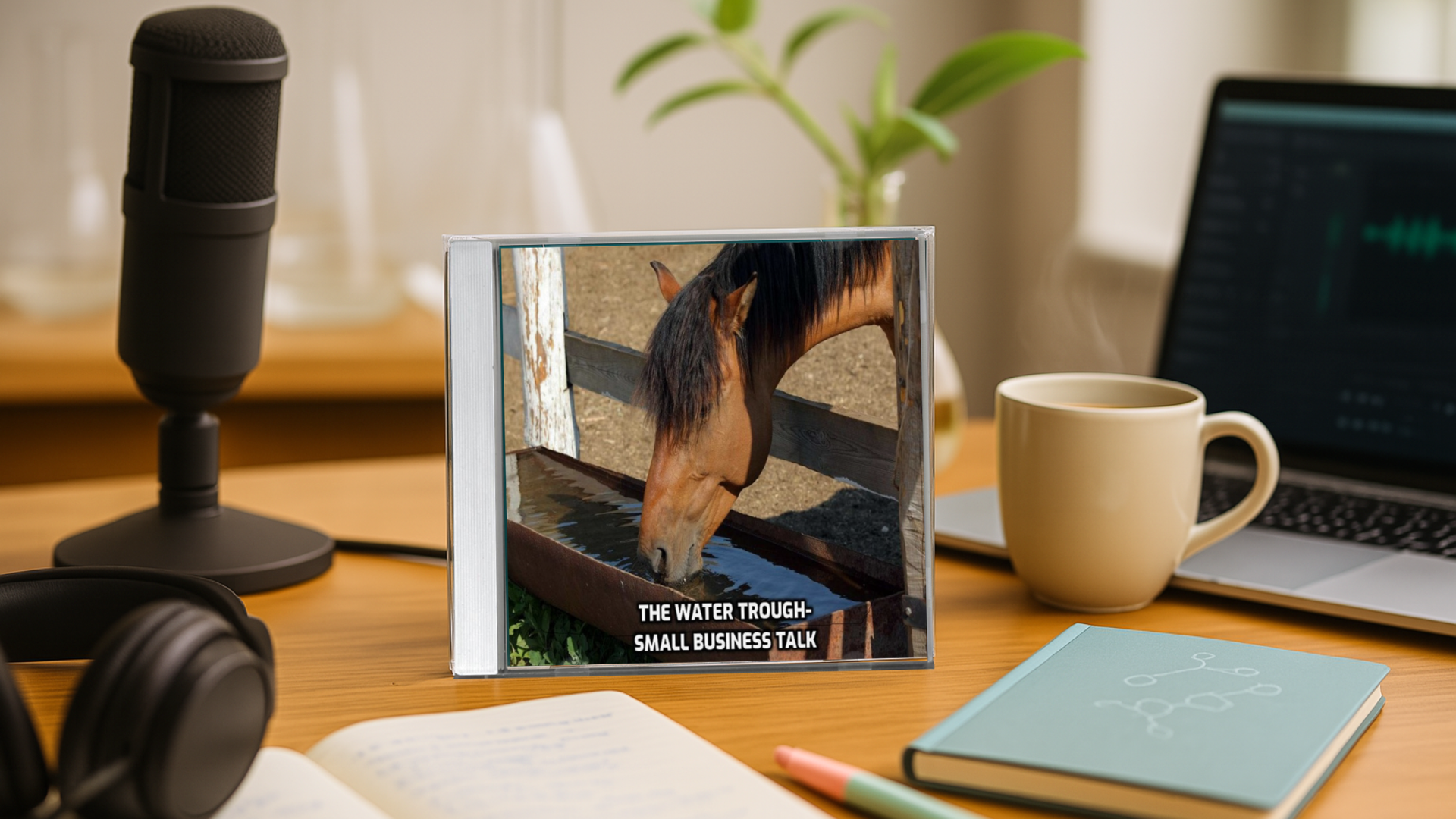
I recently joined Ed Drozda on The Water Trough podcast for a conversation about something I think a lot of high performers quietly experience.
You look like you're coping.
You're meeting deadlines. Showing up for your team. Looking after your family. From the outside, everything seems to be working.
But inside, you're running on fumes.
Ed and I talked about why burnout can be so difficult to recognize when you're in the middle of it, why so many women dismiss the early warning signs, and how simple creative practices can help you step out of survival mode before you reach breaking point.
If you'd like to listen to the full conversation, you can find it here:
It's Hard to Read the Label When You're Inside the Jar
One analogy came up during our conversation that I still think about.
When you're inside the jar, you can't read the label.
That's what burnout felt like for me.
At the time, I didn't think, I'm burning out.
I thought I was busy.
Everyone was busy during the pandemic. Everyone was adapting. Everyone was juggling more than usual.
I was working in medical devices, helping support the development of emergency ventilators while my children were navigating remote school. My husband had taken over our home office, so I worked from a small folding table in our bedroom.
There was no separation.
Work happened where I slept.
Emails were there when I woke up and still there before I went to bed.
My stress never really had a chance to switch off.
Looking back, the signs seem obvious.
Living through it, they didn't.
The Warning Sign I Didn't Expect
For me, the biggest clue wasn't work.
It was art.
Creativity had always been how I decompressed. I'd spend time in my studio after work, make something with my hands, and I'd come out feeling calmer than when I walked in.
Then one day, I couldn't.
I'd walk into my studio, look at my supplies, and just... stare.
Nothing came.
That was the moment I realized something wasn't right.
It wasn't that I'd stopped loving art.
I'd simply run out of the mental and emotional space to create.
A Tiny Experiment That Changed Everything
The turning point wasn't dramatic.
It started during another long Zoom meeting.
Almost absentmindedly, I began drawing simple lines on the edge of my notebook.
Nothing artistic.
Nothing planned.
Just lines.
As I kept drawing, I noticed my breathing slowing down. My shoulders relaxed. I found myself breathing in rhythm with my pen.
Being a scientist, I couldn't ignore that.
I remember thinking, There's something happening here.
That curiosity sent me down an entirely new path, researching creativity, art therapy, coaching, and the neuroscience behind why simple drawing can have such a calming effect.
Why Simple Works Better Than Perfect
One thing Ed asked about was how people respond when I first introduce creative coaching.
The reaction is almost always the same.
"I'm not creative."
Or...
"I don't have time."
Those are probably the two biggest barriers.
What's interesting is that neither one usually turns out to be true.
The exercises I use aren't about creating beautiful artwork.
They're intentionally simple.
Think stick figures.
Think doodles.
Think Pictionary.
The goal isn't to create something worth framing.
The goal is to help your brain slow down long enough to notice what's really going on.
The Surprising Gift of Making Time
One thing that really stood out from my early coaching groups was what happened after the program ended.
Before we started, almost every woman told me she didn't have time for coaching.
Afterwards, many of them told me they felt like they'd gained time.
Not because their schedules became lighter.
Because they became clearer.
They started setting boundaries.
They became more intentional about where they spent their energy.
They stopped automatically saying yes to everything.
It's amazing how much time appears when you're no longer carrying things that were never yours to begin with.
The Difference Between Commitment and Overcommitment
One question Ed asked really made me think.
What's the difference between being committed and being overextended?
I think it comes down to intention.
There are times when you're deeply engaged in meaningful work. You're challenged, you're learning, and you're in that wonderful state where time seems to disappear because you're completely immersed.
That's very different from constantly pushing yourself because you feel you should.
One more meeting.
One more project.
One more favour.
One more late night.
The problem is that "one more" eventually becomes your normal.
And somewhere along the way, you stop asking yourself whether it's still serving you.
The Two-Second Question
One of the simplest practices I encourage is also one of the hardest.
Pause.
Before saying yes.
Before volunteering.
Before taking on another responsibility.
Ask yourself one question.
Why am I doing this?
Not why should I do this.
Why do I want to do this?
Sometimes you'll still say yes.
Sometimes you'll realize you've been operating on autopilot for weeks.
That tiny pause creates space for a more intentional decision.
What a Drawing Can Reveal
One of my favourite coaching exercises is called Building Boundaries, Not Walls.
You draw yourself in the middle of a page.
Around yourself, you draw the people, activities, and places that give you energy.
Then you create a boundary around them. Some people draw gardens. Others draw forests, fences, or even biological cell membranes.
Outside that boundary goes everything that drains them.
The fascinating part isn't the drawing itself.
It's the conversation afterwards.
People often discover things they hadn't consciously recognized.
They realize they've been protecting the wrong things.
Or that they've been allowing certain stresses much closer than they wanted.
The page becomes a mirror.
There's No Wrong Way to Do This
One story I shared on the podcast still makes me smile.
During one group coaching session, I asked participants to draw a lighthouse and a boat as part of an exercise about moving toward a goal.
One engineer ignored the instructions.
She drew a bridge instead.
When I asked why, she said she hated boats.
A bridge made far more sense to her.
I was thrilled.
Not because she'd followed the exercise.
Because she hadn't.
For the first time, she'd stopped worrying about doing it "right" and created something that genuinely reflected her own thinking.
That moment captured exactly what this work is about.
Giving yourself permission to trust your own perspective.
Burnout Doesn't Usually Arrive Overnight
One thing I often remind clients is that burnout isn't a single event.
It's a pattern.
It develops through hundreds of small choices.
Staying late.
Skipping lunch.
Checking emails before bed.
Saying yes when you wanted to say no.
And recovery works the same way.
It happens through small, intentional choices repeated over time.
You don't wake up one morning completely recovered.
You gradually build different habits.
You become more aware of your own patterns.
You notice when you're slipping back into old ones.
And you gently steer yourself back.
If This Conversation Resonates
If you've been feeling like you're constantly pushing through, I hope this conversation reminds you that there is another way.
Not a perfect way.
Just a more intentional one.
If you'd like to experience these creative practices for yourself, you can start with my 5-Day Creative Reset Challenge, where I'll guide you through five simple exercises designed to help calm your nervous system and bring a little more clarity to your day.
You can also subscribe to The Creative Shift, my weekly newsletter where I share practical ideas, reflections, and creative tools for women navigating demanding careers.
Because sometimes the biggest shift doesn't come from working harder.
Sometimes it begins the moment you stop long enough to ask yourself why you're saying yes in the first place.