Why Drawing Helps When Talking Isn’t Enough
You know that feeling when you can explain something logically, but it still doesn’t feel resolved?
You’ve talked it through. You’ve journaled. You’ve replayed the situation in your head. And yet, something is still stuck.
That’s often the moment when women I work with start to doubt themselves. They assume they’re missing the right insight or asking the wrong question.
But sometimes, the issue isn’t insight. It’s access.
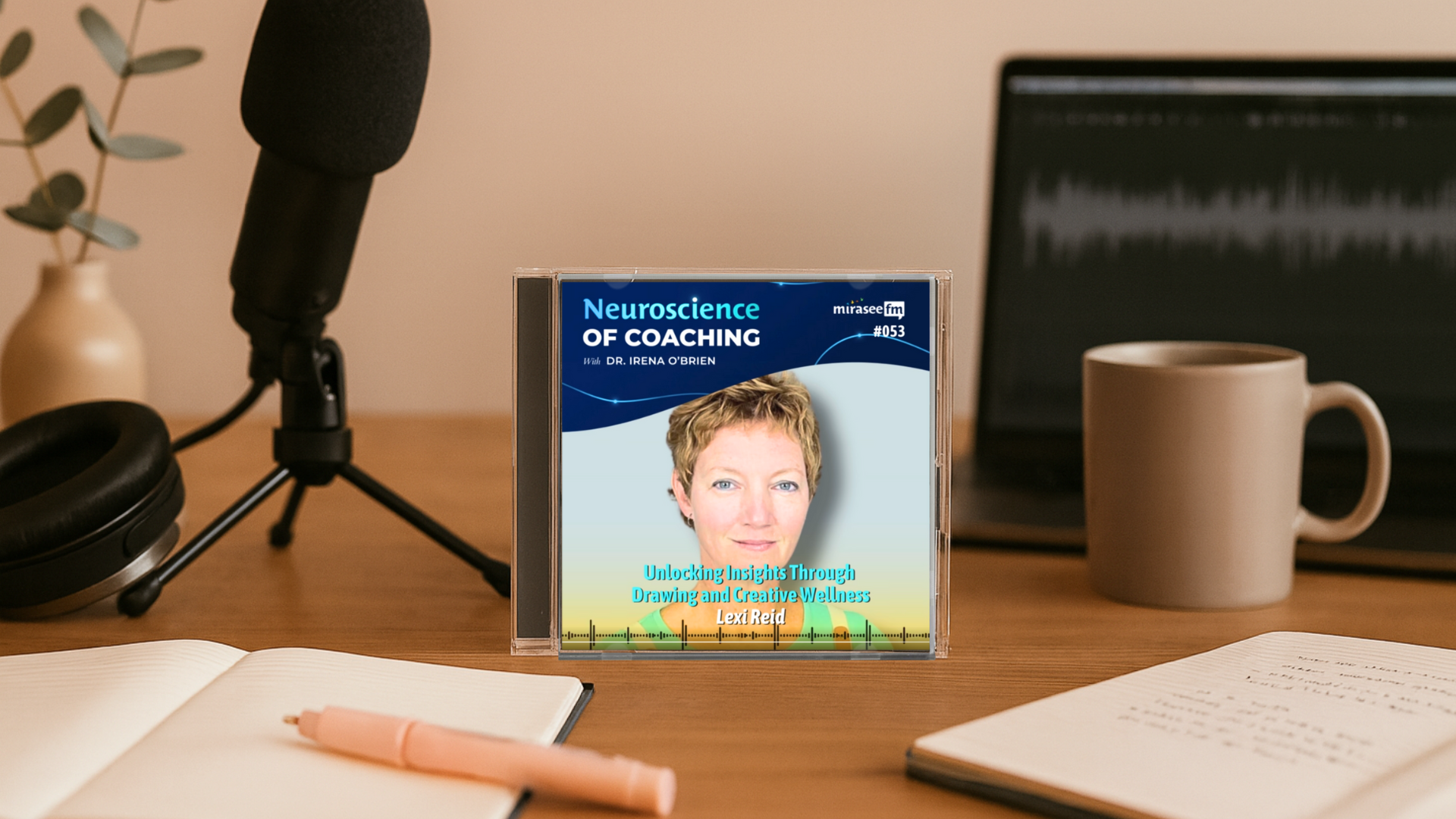
In my recent conversation with Dr. Irena O’Brien on the Neuroscience of Coaching podcast, we explored why drawing can help unlock clarity when conversation alone doesn’t. Not because it’s artistic or expressive in the traditional sense, but because it engages the brain differently. And that difference matters.
Why Talking Isn’t Always Enough
Most high-achieving women in STEM are very good with words. They explain, analyze, and reason for a living.
But when you’re stressed or burned out, the brain tends to stay in familiar loops. You think the same thoughts, rehearse the same concerns, and reach the same conclusions.
From a neuroscience perspective, this makes sense. Chronic stress pushes the brain toward efficiency, not exploration. It favours well-worn pathways and repetitive thinking patterns.
That’s where drawing comes in.
When you pick up a pen and make even simple shapes, several parts of the brain begin working together. The visual system processes form and colour. The motor system guides your hand. The thinking brain organizes meaning.
This whole-brain engagement creates conditions for flexibility instead of rigidity. It opens space for insight that hasn’t yet been put into words.
“I’m Not Creative” and Other Common Concerns
Almost every client I work with says some version of this at the beginning.
“I’m not creative.”
“I can’t draw.”
“I haven’t done this since school.”
What they’re really saying is that they associate creativity with performance or artistic skill. That’s not what we’re doing here.
I often ask a simple question: can you draw at the level of Pictionary?
If the answer is yes, that’s enough.
These drawings aren’t meant to be polished. They’re more like visual notes or emotional shorthand. Stick figures, symbols, lines, ladders, circles. The goal is not to make something beautiful. It’s to make something visible.
What Shows Up on the Page
One of the most powerful things about drawing is that it reveals how you feel, not just what you think.
In my work, I often use a simple bridge exercise. You draw where you are now on one side of the page, where you want to be on the other, and the bridge in between.
One woman once drew a narrow rope bridge with missing planks and rushing water below. When she looked at it, she laughed and said, “I could have drawn any bridge.”
But this was the bridge that matched her internal experience.
She realized she felt unsafe moving toward her goal. She noticed she had imagined obstacles she hadn’t questioned before. Seeing it on paper helped her recognize that many of those barriers were self-imposed.
That awareness didn’t come from talking. It came from seeing.
Drawing as Emotional Regulation
There’s another layer to why drawing works. It’s calming.
The rhythmic, intentional movement of the hand helps lower stress and supports a more regulated nervous system. Many people naturally fall into a light flow state, a relaxed but focused place where clarity tends to emerge.
For women who find traditional meditation difficult, drawing can function as an active form of mindfulness. You’re present. You’re focused. You’re not trying to empty your mind. You’re giving it something gentle to do.
Even two minutes of drawing simple lines while breathing slowly can help the body settle.
Visual Tools for Common Coaching Themes
In my creative wellness work, I use drawing to explore themes that come up again and again for women in STEM.
Boundaries
One exercise invites you to draw what you want to protect, and how you want to protect it. Some people draw gardens with gates. Others draw circles, fences, or walls.
What matters is not the image, but what it reveals about how you relate to your time, energy, and commitments.
Goals
Some people think in steps. Others think in clusters. That’s why I offer different goal drawings, like ladders or flowers with petals.
When you choose the format that resonates, you often discover new ways of thinking about progress. You notice what’s missing. You see where you might be overloading yourself or leaving out what matters most.
Stress in the Body
A simple body scan drawing can show where tension lives. Sharp shapes. Dark scribbles. Heavy colours.
When people revisit these drawings later, they often remember exactly how they felt at the time. These images become emotional anchors, not just memories.
What Changes Over Time
When drawing becomes part of regular self-reflection, something shifts.
Women start recognizing their patterns sooner. They notice when their energy is depleted. They remember what helps them refill it.
One woman told me that a simple drawing of a cup filled with the things she wanted more of has stayed with her long after our work together ended. She still pictures it when she’s overwhelmed and asks herself what she needs in that moment.
That’s the power of visual anchors. They stay with you.
A Simple Place to Start
If you’re curious, here’s a gentle experiment you can try.
Take a piece of paper and draw a line down the middle.
On one side, draw how you’re feeling right now.
On the other side, draw what you need more of.
Use symbols, shapes, or colours. There’s no need to explain it to anyone. Just notice what shows up.
A Few Questions to Sit With
You might gently ask yourself:
- What feels stuck or repetitive in my thinking lately?
- What might I notice if I drew this instead of talking it through?
- Where could a small pause help my nervous system settle today?
There’s no rush to answer. Curiosity is enough.
A Gentle Invitation
If this way of working resonates, you’re welcome to explore it further.
You can subscribe to The Creative Shift, my weekly newsletter where I share low-pressure, science-informed creative practices.
Or you can try the 5-Day Creative Reset Challenge, a free email series with short prompts, videos, and reflection questions.
You don’t need to be creative.
You don’t need fancy supplies.
You just need a pen, a few minutes, and permission to try something different.
Sometimes, clarity doesn’t begin with the right words.
Sometimes, it begins with a line on a page.