When Everything Works But You Still Feel Off
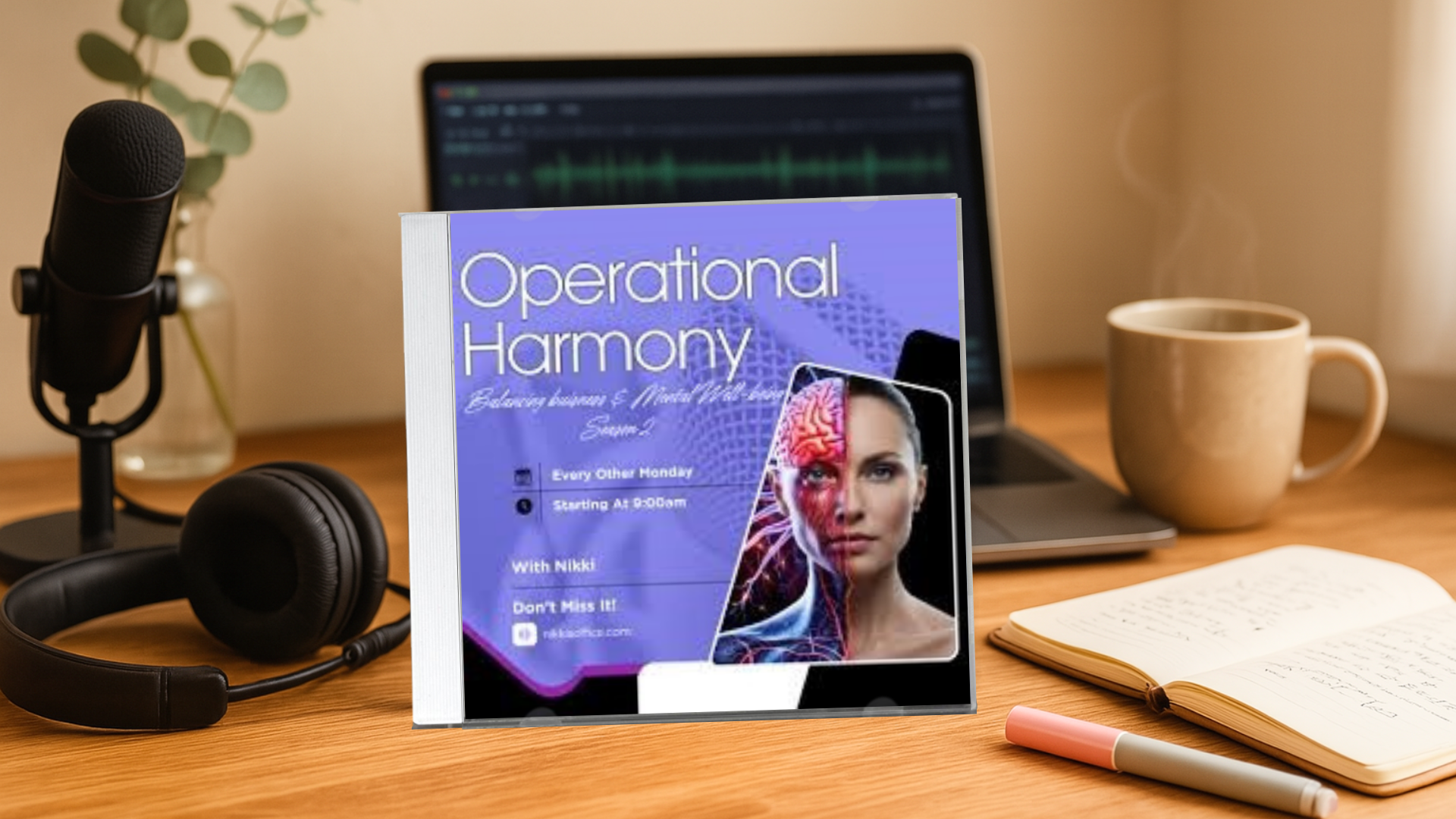
I recently joined Nikki Walton on the Operational Harmony podcast for a conversation about something that doesn’t get talked about enough in high-performing environments.
What happens when everything is technically working…
but you don’t feel like yourself anymore.
You’re meeting deadlines.
You’re solving problems.
You’re showing up the way people expect you to.
And yet, underneath all of that, there’s a quiet sense of disconnection.
In this conversation, we explored why that happens, especially for women in STEM, and what it takes to come back from that state in a way that feels sustainable.
If you’d like to watch or listen to the full episode, you can find it below.
When Performance Masks Disconnection
One of the things I shared is how easy it is to stay in motion when you’re used to performing at a high level.
You know how to think your way through problems.
You know how to deliver.
You know how to keep going.
So even when something feels off, you can often override it.
And from the outside, everything still looks fine.
This is where it gets tricky.
Because the signals that something needs attention aren’t always obvious. They’re subtle.
A sense of flatness.
Less interest in things you used to enjoy.
More effort required for the same level of output.
It’s not a breakdown. It’s more like a slow drift.
Why Logic Alone Doesn’t Get You Back
For a lot of women in STEM, the default response is to try to think their way out of it.
Analyze what’s wrong.
Come up with a better plan.
Optimize the system.
And those skills are incredibly valuable.
But they don’t always work when the issue isn’t purely cognitive.
Because what’s often happening is a kind of nervous system overload.
You’ve been in a constant state of doing, deciding, and responding.
And your system hasn’t had a chance to reset.
That’s not something you can solve with more thinking.
What “Operational Harmony” Actually Looks Like
What I appreciated about this conversation is that we talked about harmony not as perfection, but as alignment.
Where how you’re operating externally matches what’s happening internally.
That doesn’t mean everything is easy.
It means you’re not constantly overriding yourself.
You’re able to notice when something feels off.
You’re able to respond instead of just react.
You have ways to come back to baseline when things feel intense.
That’s what creates sustainability.
The Role of Creative Practices in Resetting
This is where creativity comes in, in a way that often surprises people.
Not as something extra to add to your schedule.
But to shift your state.
When you’re drawing, even something simple, a few things happen.
Your attention moves out of constant problem-solving.
Your body gets involved through movement.
Your breathing often slows without you trying to control it.
And that creates space.
It doesn’t require a lot of time.
Even a few minutes can be enough to interrupt that ongoing loop of thinking and doing.
What This Can Look Like in Real Life
We talked about how these practices can fit into a normal workday.
Not as a big, dedicated session.
But as small moments.
A few minutes between meetings.
A quick reset after a difficult conversation.
A way to transition out of work at the end of the day.
It can be as simple as:
Drawing repetitive lines while you breathe.
Filling a page with shapes or patterns.
Letting your hand move without trying to control the outcome.
There’s no pressure for it to look like anything.
That’s part of what makes it effective.
What You Start to Notice Over Time
When you start doing this regularly, even in small ways, you notice changes.
You catch yourself earlier when you’re getting overwhelmed.
You have something to reach for that isn’t just pushing through.
You feel more connected to what you’re experiencing.
And that creates more choice.
Instead of automatically reacting, you can pause.
Instead of staying stuck in your head, you can shift your state.
If You’ve Been Running on Autopilot
If any of this sounds familiar, there’s nothing wrong with you.
This is a very common pattern, especially in environments that reward output and problem-solving.
But it’s not something you have to stay in.
You don’t need a full reset or a big life change to begin.
You just need a small way to interrupt the pattern.
A Simple Place to Start
If you want to try this for yourself, start small.
Take two to five minutes.
Grab a piece of paper and a pen.
And just begin.
No plan. No expectation.
Let your hand move. Notice your breathing. See what shifts.
That’s enough.
If This Conversation Resonates
If this idea of coming back into alignment resonates with you, you might want to explore it a bit more.
You can start with the 5-Day Creative Reset Challenge, where I share simple practices like this that fit into a busy day.
Or join The Creative Shift, my weekly newsletter with reflections and tools around creativity, stress, and wellbeing.
Because operational harmony isn’t about doing more.
It’s about finding a way to work and live that feels like it fits.