Reconnecting After Burnout Through Creative Practice
You used to love creative things.
Maybe it was sketching in the margins of your notebook. Rearranging colours on a page. Painting late at night when the house was quiet.
And then, somewhere along the way, that part of you went quiet.
Not because you stopped caring. Not because you lost your ability. But because you were carrying too much for too long.
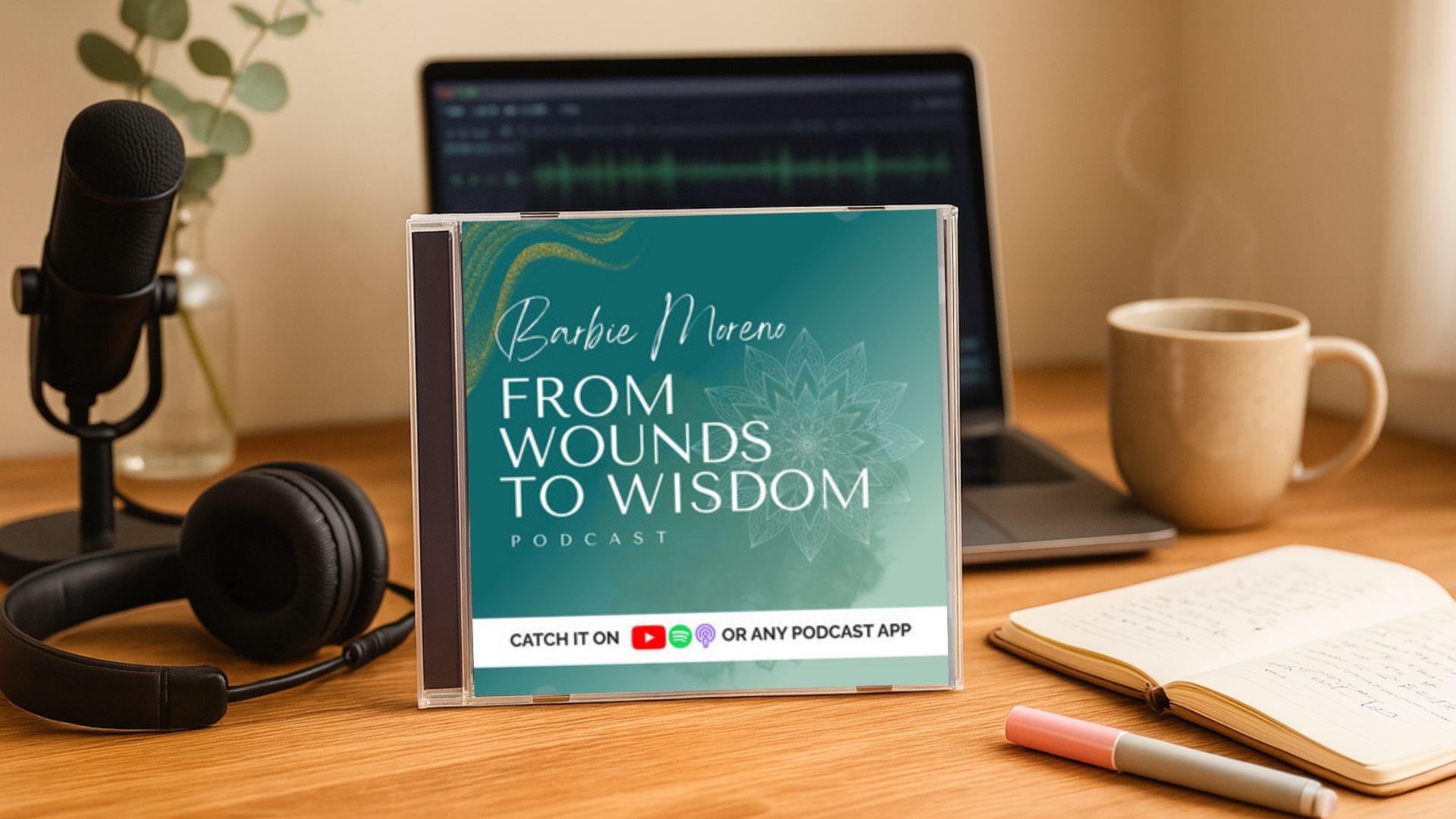
In my conversation with Barbie Moreno on the From Wounds to Wisdom podcast, we talked about how burnout rarely announces itself dramatically. More often, it settles in gradually. It shows up as fatigue that doesn’t improve with sleep. As irritability you can’t quite explain. As a subtle disconnection from the things that used to feel like you.
For me, the clearest signal was this: I stopped creating.
When Success Still Feels Heavy
On paper, my career looked steady and accomplished. I had followed a traditional scientific path. Undergraduate degree. Master’s. PhD. Postdoctoral research. Government work. Then into medical device development.
I enjoyed the structure and intellectual challenge. I liked solving problems and contributing to meaningful projects. During the pandemic, that meaning intensified when our team was involved in developing emergency ventilators. The urgency was real, and so was the pressure.
At the same time, my children were at home navigating online school. The boundaries between work and home blurred until they almost disappeared. My laptop stayed open. My mind rarely rested.
I was still performing well. Still capable. But internally, something felt strained.
Sleep became lighter. My thoughts sped up. I started second-guessing details I had confidently handled for years. The mental load felt constant, even in quiet moments.
Burnout does not always look like collapse. Sometimes it looks like competence held together by tension.
The Weight You Can’t See
During the podcast, we also spoke about the invisible weight many women carry, especially in STEM and other male-dominated environments.
You learn to prepare more thoroughly than necessary. To double-check your work before speaking. To make sure your tone is balanced and your ideas are airtight. You may find yourself sitting slightly back from the table, physically or metaphorically, to avoid being perceived as too much.
These adaptations are subtle, but they accumulate.
When you’re constantly navigating expectations, advocating for yourself, and managing emotional labour alongside technical work, your nervous system rarely gets to stand down. Over time, that chronic vigilance contributes to exhaustion in ways that are difficult to measure but very real to experience.
If you’ve ever felt tired in a way that feels deeper than a long week, you’re not imagining it.
When Creativity Feels Out of Reach
For years, art had been my way of processing and resetting. It wasn’t about being an artist. It was about having an outlet.
And then, during the height of that stress, I couldn’t access it. Walking into my studio felt overwhelming. Even the idea of choosing colours felt like another decision I didn’t have energy for.
That loss was quiet but significant. When something that once brought you relief begins to feel heavy, it’s worth paying attention.
The turning point did not come from a big decision. It came from a small, almost accidental moment. During a Zoom call, I picked up a pen and began drawing simple lines. Repetitive shapes. Nothing intentional.
As I moved my hand, I noticed my shoulders drop slightly. My breath slowed. My thoughts softened at the edges.
It was subtle, but it was enough.
Why Simple Mark-Making Calms the System
There’s a reason that moment mattered.
When you engage your hands in repetitive, rhythmic movement, you activate parts of the brain associated with regulation and focus. The act of drawing shifts attention from looping thoughts to sensory experience. Your visual system, motor system, and thinking brain begin working together.
For women who are used to operating primarily from analysis and language, this shift can feel surprisingly grounding. It provides a different entry point into awareness.
You are not trying to solve anything.
You are not producing something for anyone else.
You are simply making marks on paper.
That simplicity lowers the barrier to entry. It allows your nervous system to experience a small moment of safety.
Seeing What You’ve Been Carrying
In my Creative Reset programs, we use art therapy-inspired exercises to help make internal experiences visible.
One activity invites you to draw a bridge between where you are now and where you want to be. There is no artistic expectation. Just symbols and shapes.
What’s striking is how often the bridge appears fragile. Narrow planks. Stormy water beneath. Large gaps.
When women look at their drawings, they often pause. They realize they’ve been assuming the path forward is dangerous or unstable. Seeing it visually creates a shift.
Instead of staying inside the fear, they can ask, “What would make this bridge feel sturdier?”
The drawing becomes a conversation, not a verdict.
The Power of Naming Depletion
Another simple tool is the Battery exercise.
You draw separate batteries representing different parts of your life. Work. Family. Personal time. Creativity. Then you shade in how full each one feels.
It sounds almost too simple. Yet when someone sees that one battery is nearly empty, it provides clarity that weeks of overthinking may not.
There is something powerful about witnessing your own depletion on paper. It moves the experience from vague overwhelm to specific awareness.
And awareness is the first step toward change.
Learning to Pause Before Saying Yes
A theme that often emerges in this work is the difficulty of saying no.
Many women default to yes because it feels easier in the moment. Easier than disappointing someone. Easier than negotiating. Easier than creating friction.
But each automatic yes reinforces a pattern of overextension.
A small pause can interrupt that cycle. Not a dramatic refusal. Just a breath before answering. A moment to ask, “Do I actually have the capacity for this?”
That pause reintroduces choice. And choice rebuilds a sense of agency that burnout tends to erode.
From Survival to Steady
Burnout can feel like a personal failure. In reality, it is often a predictable outcome of sustained overgiving without recovery.
Moving from wounds to wisdom does not require reinventing your life. It requires noticing your signals earlier. Allowing small resets. Giving yourself permission to step out of constant output and into reflection.
Creativity, in this context, is not a hobby. It is a regulation tool. A way to return to yourself without adding more pressure.
A Small Experiment
If you’d like to try something this week, keep it simple.
Set a timer for five minutes.
Take a piece of paper and draw lines that match your breath.
Notice what happens in your body as you do.
There is nothing to evaluate. Nothing to improve.
Just notice.
If This Resonates
If you’ve been feeling stretched thin or quietly disconnected from yourself, you’re not alone. There is nothing wrong with you.
You might consider starting with the 5-Day Creative Reset Challenge, which offers short, art therapy-inspired prompts designed to fit into real life.
Or you can subscribe to The Creative Shift, where I share reflections and simple practices for women in STEM who want to feel more present and less alone in what they’re carrying.
You don’t need to become more disciplined or more driven.
You may simply need space to recover.
And sometimes, that recovery begins with a single line on a page.