How to Reclaim Your Time and Energy Without Doing More
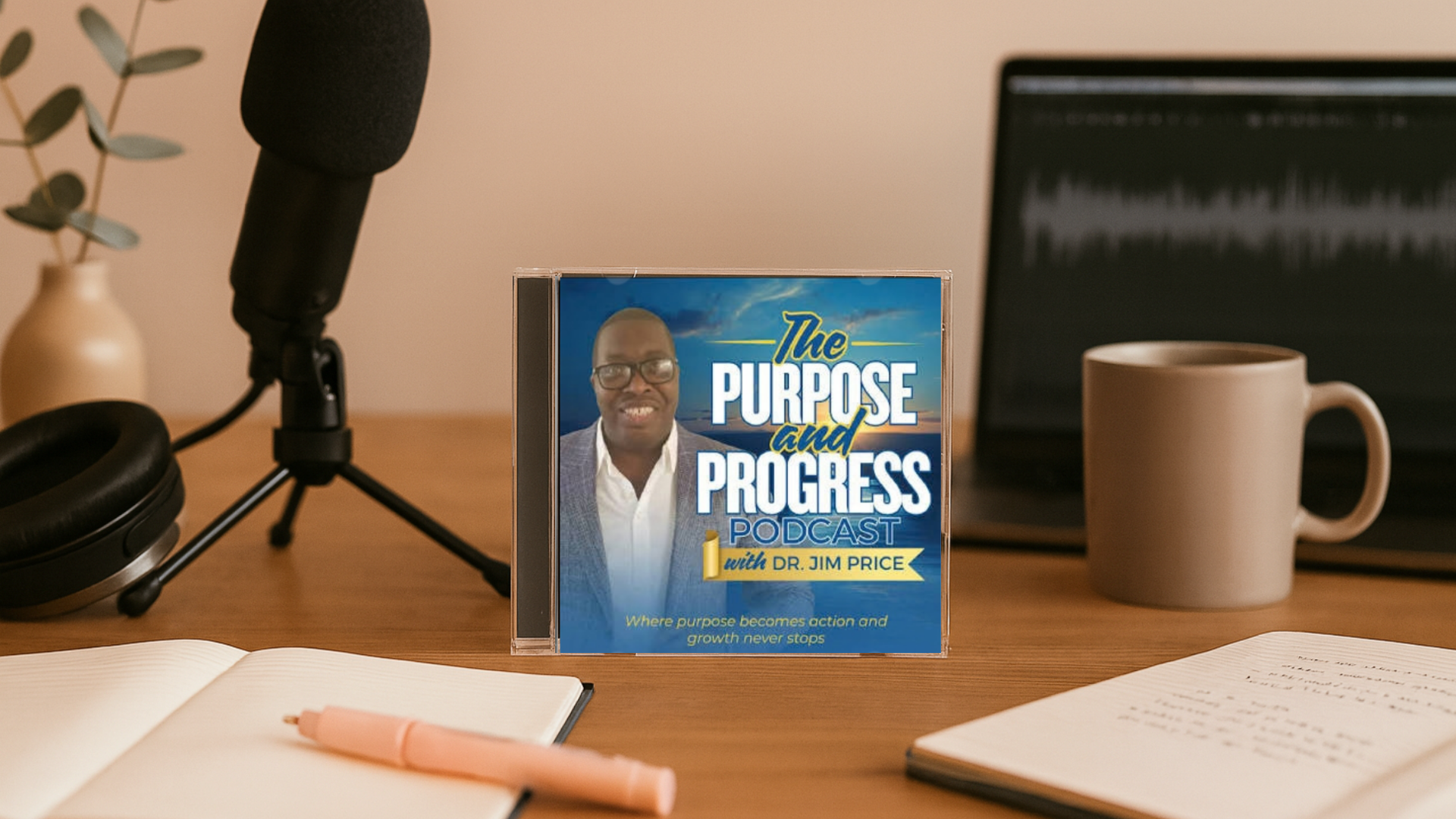
I recently joined Dr. Jim Price on the Purpose in Progress podcast for a conversation about burnout, creativity, and the small changes that can make a surprisingly big difference in how we experience our lives.
Jim's podcast focuses on the journeys behind people's accomplishments. Not just where they've ended up, but the challenges, decisions, and unexpected turns that helped them get there.
I appreciated that perspective because my own career certainly hasn't followed a straight line.
We talked about my transition from research scientist to creative wellness coach, what happened when the pandemic pushed me beyond my limits, and why I've come to believe that meaningful progress doesn't always mean doing more.
Sometimes it means becoming more intentional about what you're already doing.
And sometimes it means giving yourself permission to do a little less.
The Career I Planned Isn't the One I Ended Up With
Growing up, I loved science and art equally.
When it came time to choose a direction for university, my parents encouraged me to pursue science. It seemed like the more practical career choice, and I could always continue making art on the side.
So that's what I did.
I earned my bachelor's degree, master's degree, and PhD, followed by a postdoctoral fellowship. Eventually, I moved beyond academic research into a not-for-profit organization, the federal government, and finally the medical device industry.
Each transition brought something new.
I was still using my scientific background, but in increasingly different ways.
By the time I was working in quality and regulatory affairs for a medical device company, my career looked quite different from the one I'd imagined when I first entered university.
And I was happy with that.
Until the pandemic changed everything.
The Responsibility Behind the Ventilators
During the early days of COVID-19, the company I worked for received a large government contract to develop emergency ventilators.
This was before vaccines were available, when hospitals were preparing for the possibility of overwhelming numbers of critically ill patients.
The urgency was enormous.
As part of the quality and regulatory team, I was responsible for helping ensure the devices met the necessary requirements and were safe to use.
It was meaningful work.
But it was also incredibly demanding.
Meanwhile, I had two children at home, one starting high school and the other starting middle school. We were all trying to navigate remote work, online classes, and the uncertainty surrounding the pandemic.
My office was in my bedroom.
There was no real separation between work and home anymore.
The days became a blur of Zoom meetings, documents, deadlines, and family responsibilities.
I kept pushing because the work mattered.
What I didn't recognize was how much it was costing me.
The Studio Door I Couldn't Walk Through
I've always been an artist.
Before the pandemic, I'd participated in juried art shows and spent time creating in my home studio. Art was something I looked forward to, especially after a demanding day at work.
But as the pressure increased, something changed.
I'd walk into my studio, look at all my supplies, and feel completely overwhelmed.
I couldn't decide what to make.
Eventually, I stopped trying.
Everything felt numb.
Looking back, that loss of interest in something I genuinely loved was one of the clearest signs that I was experiencing burnout.
At the time, though, I didn't recognize it.
I thought I was simply tired.
And like many high achievers, I assumed I'd feel better once things settled down.
Of course, there was always another deadline waiting.
A Scientific Discovery Made With a Pen
My return to creativity happened almost accidentally.
During one of those endless Zoom meetings, I started doodling.
Now, I have to admit something.
Before this, I was a bit of an artistic snob.
I thought that if I was going to spend time making art, I should be creating a proper painting or something worth displaying.
Doodling didn't seem particularly worthwhile.
But there I was, making repetitive little marks on paper while listening to a meeting.
Then I noticed something interesting.
My breathing had slowed.
My shoulders weren't quite so tense.
I felt a little calmer.
The scientist in me became curious.
Why was something so simple having that effect?
I began researching art therapy, mindfulness, and the relationship between creativity and stress. Eventually, that exploration led me toward coaching.
I started experimenting with creative exercises myself, then developed a curriculum that combined simple drawing activities with reflection and forward-focused coaching.
That's how Mind Art Wellness began.
The Extra Work Nobody Sees
During our conversation, Jim asked about the challenges women face when trying to manage stress before it becomes burnout.
One thing I brought up was invisible labour.
Many of the women I work with hold demanding positions in science, technology, engineering, and mathematics.
They're capable, knowledgeable, and accustomed to handling responsibility.
But professional responsibilities are only part of the picture.
Some women also feel pressure to fit into traditionally male-dominated environments. They may believe they need to hide their emotions, avoid showing vulnerability, or work harder to demonstrate their competence.
Then there are the responsibilities outside work.
Family.
Caregiving.
Household management.
Appointments.
The endless little things that need remembering.
It all adds up.
And because these women are so accustomed to being dependable, they often become the person everyone turns to when something needs doing.
The difficulty isn't necessarily any one responsibility.
It's the accumulation.
Eventually, even small requests can feel enormous when there's no room left for anything else.
How Much of Your Day Is Actually Yours?
Here's something that continues to fascinate me about my coaching work.
When I ask women what might prevent them from joining my 12-Week Creative Reset Program, the most common answer is time.
They already have too much to do.
The idea of adding a coaching program feels like another commitment they can't possibly manage.
I understand that.
But after completing the program, many women tell me that one of the biggest benefits was getting some of their time back.
Not because we somehow created extra hours.
We still have the same twenty-four hours in a day.
What changed was how they chose to spend them.
They began noticing where their time was going and questioning some of the commitments they'd automatically accepted.
They practised setting boundaries.
They became more comfortable saying no.
They started recognizing that not everything needed to be done by them, and not every request deserved an immediate yes.
That's an important distinction.
Being busy isn't necessarily the same as spending your time meaningfully.
Take Inventory of Your Energy
One of the exercises I shared with Jim is called Batteries.
It's wonderfully simple, and you don't need any artistic ability to try it.
Draw a few battery shapes on a piece of paper.
Each battery represents an area of your life.
You might include:
- Career
- Family
- Relationships
- Health
- Creativity
- Personal time
Now imagine how much energy you currently have available for each area.
Is your career battery at 90%, while your personal time battery is barely holding a charge?
Perhaps your family battery is full, but your health battery is nearly empty.
Or maybe everything is hovering around 20%.
There's no correct answer.
The interesting part comes afterwards, when you begin asking questions.
What's draining each battery?
What helps recharge it?
Where are you investing most of your energy?
Is that where you want it to go?
You can add words, symbols, or little drawings around each battery to capture what comes to mind.
The purpose isn't to create a perfect diagram.
It's to make something that's usually invisible a little easier to see.
What Happens When You Put Your Thoughts on Paper?
One reason I enjoy creative coaching is that drawing gives us another way to explore what's happening in our lives.
Most of us are accustomed to thinking through problems using words.
We make lists.
We analyze.
We rehearse conversations in our heads.
Sometimes we think about the same problem so much that we stop seeing it clearly.
Drawing interrupts that pattern.
It doesn't need to be elaborate. I often tell clients that if they can draw at a Pictionary level, they're ready.
Stick figures are absolutely fine.
The drawing becomes a form of visual journaling.
You take something that's been circling around inside your head and give it a physical form.
Then you can look at it.
You can ask questions about it.
You can put it away and return to it later.
And because the symbols are yours, they often carry meanings that wouldn't necessarily appear in a written list.
The drawing itself isn't the solution.
It's a starting point for reflection.
From there, coaching helps turn those observations into choices and practical steps forward.
You Don't Have to Figure Everything Out Alone
Another aspect of my work we discussed was the difference between individual and group coaching.
I enjoy both, but for different reasons.
One-on-one coaching gives us the opportunity to explore someone's challenges in greater depth.
There's time to unpack what they're experiencing, identify patterns, and work toward goals that matter to them.
Group coaching brings something different.
Shared experiences.
There's something powerful about hearing another woman describe a challenge you've been struggling with privately and realizing she understands exactly what you mean.
And sometimes another participant sees something from a completely different perspective.
That can be just as valuable.
You might arrive thinking your situation is unique, only to discover that other women are navigating similar pressures.
Or you might hear someone describe a boundary they've established and realize you could try something similar.
We learn from one another.
Leave the Laundry Behind for an Hour
Near the end of our conversation, Jim asked what advice I'd give someone who feels overwhelmed by the idea of taking the first step toward change.
My suggestion was simple.
Take yourself somewhere different.
Go to a café.
Sit in a park.
Find a quiet spot outside.
Bring a notebook and a pen if you like.
The important part is getting away from the environment where all your responsibilities are competing for attention.
When you're sitting at home, you might notice the laundry waiting to be folded.
The dishes in the sink.
The floor that needs vacuuming.
At work, there's always another email or task demanding your attention.
It's difficult to reflect when everything around you is reminding you of what you haven't done yet.
Changing your surroundings can help interrupt that cycle.
You don't need to spend the entire time making plans.
You could simply sit and ask yourself how you're doing.
Not how the project is going.
Not whether the kids have everything they need.
Not what's for dinner.
How are you doing?
It's a surprisingly difficult question when you've spent a long time focusing on everyone and everything else.
The First Step Might Be a Date With Yourself
Jim shared that, as a school counsellor, he sometimes needs a period of quiet after work before he's ready to engage with the rest of his evening.
I could relate to that.
When you've spent the day responding to other people's needs, sometimes you need a little space before taking on anything else.
It doesn't have to be elaborate.
You don't need to book a retreat or completely reorganize your schedule.
Maybe it's twenty minutes with a coffee.
A walk without your phone.
A few minutes of drawing.
Or sitting outside and watching the world go by.
The point is to create an opportunity to hear your own thoughts again.
From there, you can begin asking whether the way you're spending your days still reflects what's important to you.
And if it doesn't, what's one small thing you could change?
Small Changes Count as Progress
I think one of the biggest misconceptions about personal growth is that it has to involve a dramatic transformation.
A new career.
A completely different routine.
A major life decision.
Sometimes those changes are necessary.
But most meaningful changes begin much more quietly.
You notice you're tired.
You recognize that you've been saying yes too often.
You realize there's something you miss doing.
You decide to spend five minutes drawing instead of answering another email.
Then perhaps you do it again tomorrow.
Over time, those small decisions can begin changing how you experience your days.
That's what I appreciate about the idea of being a work in progress.
You don't need to have everything figured out before you begin.
You just need enough awareness to choose your next step.
Where Could You Make a Little More Room?
If there's one thing I hope people take away from my conversation with Jim, it's that looking after yourself doesn't have to become another complicated project.
Start small.
Find somewhere you can sit without feeling responsible for everything around you.
Take a pen and paper.
Draw a few batteries.
Notice where your energy is going and where you wish you had more of it.
Then ask yourself what one small change might look like.
Perhaps it's asking someone else to take care of dinner.
Perhaps it's saying no to a commitment that no longer fits.
Or perhaps it's simply making time to do something creative without worrying whether you're any good at it.
If you'd like to explore creative wellness for yourself, my free 5-Day Creative Reset Challenge is a gentle introduction. Each day, you'll receive a short video and a simple creative exercise that you can complete in about five to ten minutes.
You can also subscribe to The Creative Shift, my weekly newsletter where I share creative exercises, reflections, and practical ideas for reducing stress and reconnecting with yourself.
Because progress doesn't always come from pushing yourself further.
Sometimes it begins when you finally give yourself enough space to notice where you want to go.