How Reflective Drawing Helps Calm an Overloaded Brain
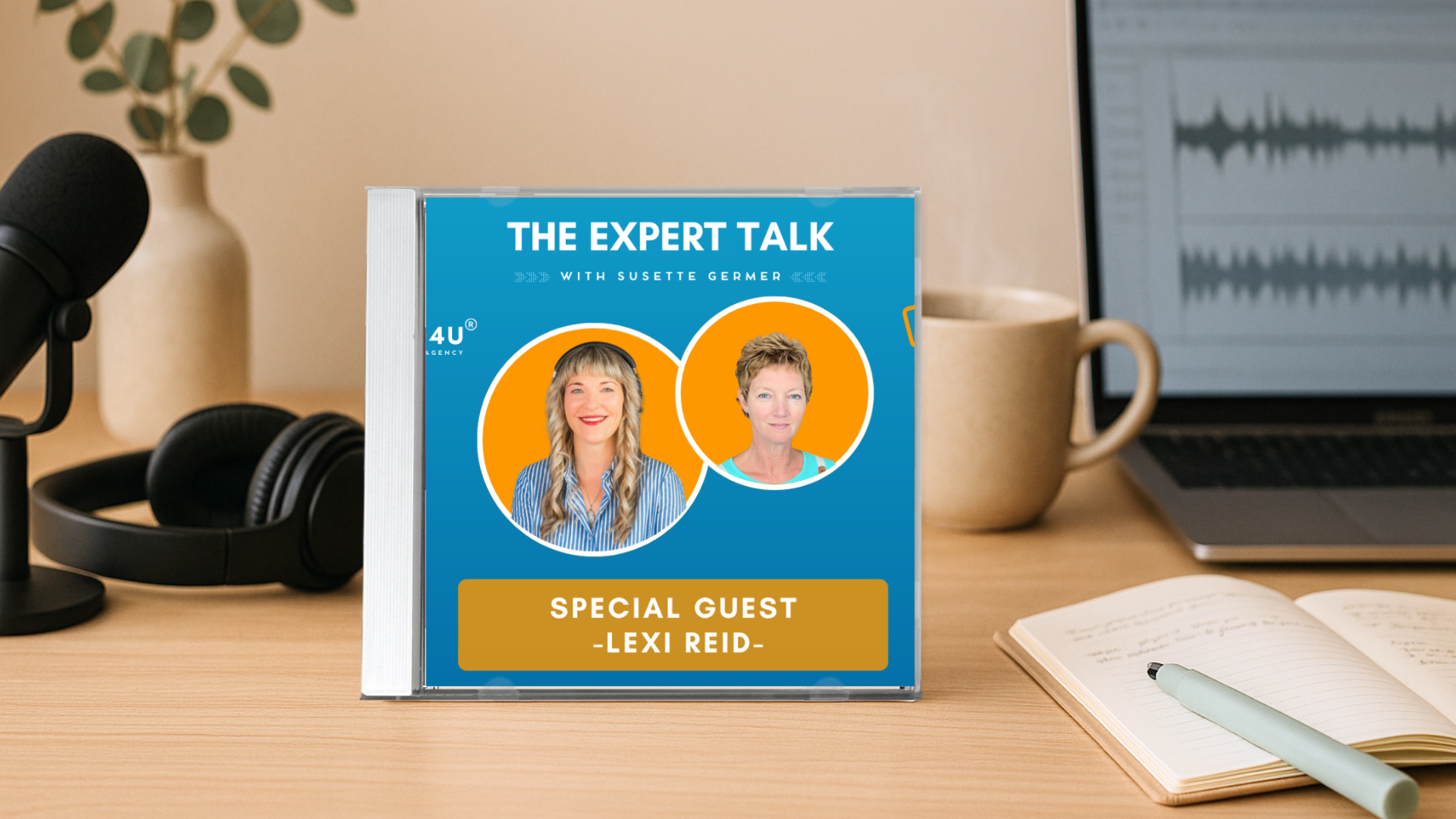
I recently joined Susette Germer on The Expert Talk Podcast for a conversation about burnout, creativity, and something that still surprises a lot of people when they first hear it.
Art can be scientific.
Not in the sense that you need to understand neuroscience to pick up a pen. But in the sense that simple creative actions can create measurable shifts in the body and nervous system.
That’s what we explored in this conversation.
We talked about burnout in STEM environments, why so many women stay stuck in autopilot for too long, and how reflective drawing can help interrupt that cycle in a way that feels practical instead of overwhelming.
If you’d like to watch or listen to the full episode, you can find it here:
The Career That Looked More Planned Than It Felt
One thing we laughed about during the interview is how polished a career path can sound in hindsight.
When someone introduces you with all the titles and accomplishments lined up neatly, it can sound incredibly intentional.
But living it rarely feels that way.
For me, it felt much more like following curiosity, saying yes to opportunities, and slowly figuring things out as I went.
I moved through science, academia, government, medical devices, consulting, art, coaching, and entrepreneurship. At the time, none of it felt like a carefully designed master plan.
It felt more like zigzagging.
And honestly, I think a lot of women relate to that.
What Burnout Looked Like Behind the Scenes
A big part of our conversation focused on the pandemic and how that period became a turning point for me.
At the time, I was working in quality and regulatory affairs for a medical device company that had secured a major emergency ventilator contract. We believed these devices would be urgently needed, and the workload reflected that pressure.
There was no real downtime.
At the same time, my kids were home doing school remotely, and like many people, I was trying to hold everything together under one roof.
What made it especially difficult was the lack of separation.
My desk was in my bedroom.
That meant work was always there. Emails were always there. My brain never really shut off.
And eventually, I started noticing changes in myself.
I couldn’t sleep properly.
I felt emotionally flat.
Even creativity stopped working.
That last part was the biggest signal for me.
The Doodle That Changed My Perspective
I’ve always been artistic, but I used to approach art very seriously.
If I was creating something, I thought it needed to be “real art.” Something polished. Something worth showing.
So doodling felt almost pointless to me.
But during one long Zoom meeting, I absentmindedly started drawing simple shapes in the margins of my notes.
And something shifted.
My breathing slowed.
My shoulders relaxed.
My body softened a bit.
And because I’m a scientist, my immediate thought was, “Okay… there’s data here.”
That moment led me into researching art therapy, nervous system regulation, mindfulness, and eventually coaching.
Not because I wanted to become a therapist, but because I became fascinated by how such a small action could create such a noticeable physiological response.
Why Drawing Helps When Your Brain Won’t Stop
One of the things we talked about in the episode is that many high-achieving women struggle to relax through traditional meditation.
Sitting quietly can actually feel stressful when your mind is already racing.
But drawing gives the brain something to do.
You’re moving your hand.
You’re focusing visually.
You’re creating rhythm and repetition.
And that creates a feedback loop between the body and the nervous system.
One very simple exercise I often use is drawing lines in time with your breath.
At first, the lines tend to look sharp, rushed, or jagged.
But as your breathing slows, the lines soften too.
You can literally watch your nervous system settling on the page.
Why STEM Women Often Need Permission to Play
Something else that came up in the conversation was how difficult it can be for women in technical fields to let themselves do something imperfectly.
Many of the women I work with are engineers, scientists, or highly analytical professionals. They’re used to precision, structure, and doing things correctly.
So even when they start these exercises, the first question is often:
“Am I doing this right?”
And the answer is always no and yes at the same time.
No, there is no single correct way to do it.
And yes, whatever they created is completely fine.
What’s interesting is that after a few weeks, something usually changes.
They begin experimenting more.
They adapt exercises to suit themselves.
They stop asking for permission.
And honestly, that shift matters just as much as the drawing itself.
The Snapshot Effect
One thing I love about reflective drawing is that it creates a snapshot.
When your thoughts stay in your head, they tend to loop endlessly.
But once they’re on paper, they become something you can step back from and observe.
You can revisit the page a week later and remember exactly how you were feeling in that moment.
But now there’s space between you and the problem.
That separation creates perspective.
And perspective often creates clarity.
The Career Question Many Women Avoid
Another theme we explored was career clarity.
A lot of women end up in roles or responsibilities almost by momentum. They say yes because it’s easier than stopping to think about what they actually want.
Yes to extra work.
Yes to obligations.
Yes to opportunities that don’t really fit.
Not because they’re wrong, but because there’s no pause between the request and the response.
And over time, that constant yes becomes exhausting.
One of the biggest things I encourage women to practice is simply pausing long enough to ask:
Do I actually want this?
Or am I trying not to disappoint someone?
That question alone can change a lot.
What Companies Often Miss
Toward the end of the conversation, we talked about workplace wellness.
So many organizations invest heavily in productivity training, leadership development, and performance systems.
But very little gets invested in helping people recover from the pressure of constantly performing.
And then companies wonder why good people leave.
Burnout prevention isn’t only about reducing stress.
It’s about helping people reconnect with themselves before they hit the point where they mentally check out.
Sometimes that starts with something as simple as giving people permission to pause.
A Different Way to Begin
If you’re feeling mentally overloaded right now, I want you to know you do not need to become an artist for this work to help.
You don’t need expensive supplies.
You don’t need talent.
You don’t need hours of free time.
You just need a place to start.
That might be a few minutes with a pen and paper before bed.
It might be drawing lines while you breathe between meetings.
It might simply be noticing that your body has been asking for a break for a very long time.
If This Conversation Resonates
If this feels familiar, you might want to explore a few simple practices for yourself.
You can start with the 5-Day Creative Reset Challenge, where I guide you through short, low-pressure exercises designed to calm the nervous system and reduce mental overload.
Or you can join The Creative Shift, my weekly newsletter where I share reflections, practical tools, and creative wellness strategies for women in STEM and other high-pressure environments.
Because sometimes burnout doesn’t happen because you’re weak.
Sometimes it happens because you’ve been saying yes for too long without giving yourself space to breathe.